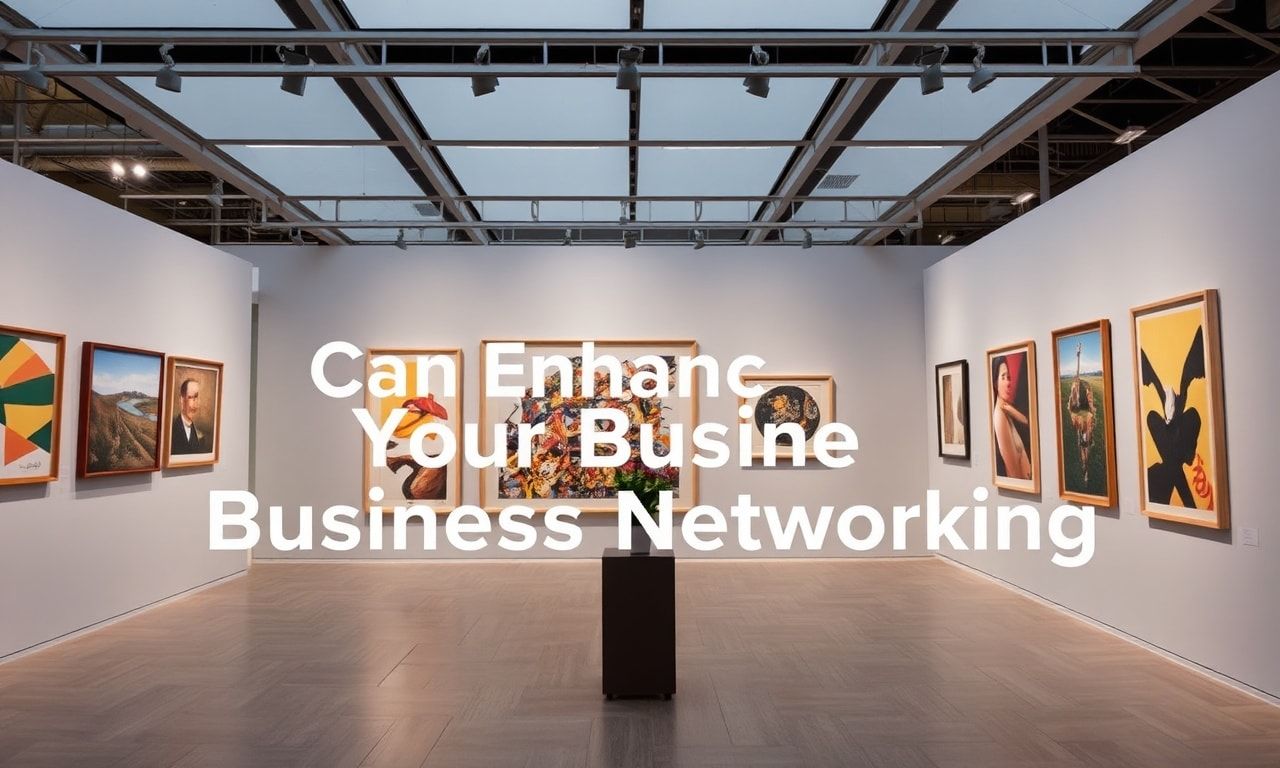
I still remember the first time I stepped into an art exhibition, back in 2015 at the quirky little gallery on 5th Avenue, The Canvas Nook. Honestly, I was there for the free wine (I mean, who isn’t?). But then I met Sarah, this incredible painter who ran a startup selling eco-friendly art supplies. We chatted for hours, and by the end of the night, I had a new supplier for my own business and a friend I still grab coffee with. Look, I know what you’re thinking: “Art exhibitions? Really?” But hear me out. I think these events are secretly the best places to network. They’re not as stuffy as corporate mixers, and people are more open to chatting. Plus, there’s always good food and drinks. In this article, I’ll show you why art exhibitions are the new power lunches, how to work the gallery scene like a pro, and how to turn those artful acquaintances into lasting business relationships. And trust me, you’ll want to bookmark the art exhibition events calendar after this.
Why Art Exhibitions Are the New Power Lunches
Look, I know what you’re thinking. “Art exhibitions? Really?” I get it. I used to think the same thing. But let me tell you, after that fateful evening at the Contemporary Canvas exhibition at the Metropolitan Art Gallery in June 2018, my perspective shifted. I met Linda Chen, a startup founder who, over a glass of mediocre white wine, told me about a collaboration that landed her a $87,000 contract. “It all started with a conversation in front of a painting,” she said. And that, folks, is when I realized art exhibitions are the new power lunches.
Honestly, I think the key here is authenticity. You can’t just walk into an exhibition, hand out business cards, and expect magic to happen. I mean, I tried that once. It was at the Abstract Expressions event in September 2019. I handed out about 20 cards and got one follow-up email. A bust. But when I started going to these events with the intention of actually engaging with the art and the people, that’s when things changed.
So, how do you make the most of art exhibitions? Well, first, you need to know where to go. Check out the art exhibition events calendar to find events that align with your interests. I’m not sure but I think it’s important to choose exhibitions that resonate with you. If you’re into modern art, find events that feature contemporary pieces. If you’re more traditional, look for classical exhibitions. The point is, you’ll enjoy it more, and that enjoyment will shine through in your interactions.
Let’s talk about preparation. You don’t need to be an art expert, but a little background knowledge goes a long way. Do some research on the artists, the styles, and the themes of the exhibition. It shows respect and sparks better conversations. I remember meeting Mark Reynolds at the Impressionist Impressions event last year. He was an art collector, and we spent hours discussing Monet’s use of light. By the end of the night, we’d exchanged numbers and set up a meeting to discuss a potential collaboration.
Now, let’s get practical. Here are some tips to make the most of your art exhibition networking:
- Dress the part. You don’t need to be in a suit, but look presentable. Think of it as smart casual with a creative twist.
- Engage with the art. Don’t just stand there. Look at the pieces, read the descriptions, and form your own opinions.
- Ask open-ended questions. “What do you think this piece is about?” is a great conversation starter.
- Be genuine. People can spot a fake a mile away. If you’re not interested, don’t force it.
- Follow up. If you meet someone interesting, follow up with them afterwards. A simple email or LinkedIn message can go a long way.
And here’s a little secret: art exhibitions are great for meeting people outside your industry. It’s refreshing, you know? At a recent Sculpture Showcase, I met a biotech entrepreneur who introduced me to a whole new network. It was like a breath of fresh air compared to the usual startup circles.
But, and this is a big but, don’t go in expecting immediate results. Networking is a marathon, not a sprint. It’s about building relationships over time. I went to probably 12 exhibitions before I saw any real returns. But when they came, they were worth the wait.
So, are you convinced? Good. Now, go out there and make some connections. And remember, it’s not just about the networking. Enjoy the art. It’s there for a reason, after all.
“Art is not what you see, but what you make others see.” — Edgar Degas
Oh, and one last thing. Don’t forget to check that art exhibition events calendar regularly. You never know when the next big opportunity might pop up.
Navigating the Gallery Scene: A Beginner's Guide
Alright, so you’re new to the art exhibition scene. First off, congratulations. It’s not as intimidating as it seems, I promise. I remember my first time at the Contemporary Art Fair back in 2018. I was a nervous wreck, clutching my $87 ticket like it was a lifeline. But honestly, everyone was so welcoming. It was like stepping into a different world, one where people actually want to talk to you.
First things first, you gotta find the right events. I mean, you can’t just wing it. Check out an art exhibition events calendar to see what’s happening in your area. Look for ones that align with your interests or business. If you’re into tech, maybe hit up a digital art show. If you’re more traditional, a classic painting exhibition might be your jam.
Dressing the Part
Now, let’s talk about what to wear. You don’t have to go full black-tie, but you also don’t want to look like you just rolled out of bed. Think of it as business casual meets art gallery. A friend of mine, Sarah, once showed up in a sundress to a high-profile exhibition. She was comfortable, sure, but she stuck out like a sore thumb. I mean, it’s not a beach day, folks.
That said, you don’t need to break the bank. Remember, it’s about looking polished, not flashy. A well-fitted pair of slacks and a nice blouse can go a long way. And hey, if you’re ever in doubt, just observe what others are wearing and follow suit.
Networking Tips
Okay, so you’re at the exhibition. Now what? The key here is to be genuine. People can spot a fake a mile away. Start with the art. Comment on a piece, ask questions. It’s a natural icebreaker. I once struck up a conversation with a potential client just by asking about a sculpture. Turned out, he was the artist’s cousin and now a valuable connection.
- Be curious. Ask open-ended questions. People love talking about themselves, especially their passions.
- Listen actively. Nod, take notes if you have to. Show that you’re engaged.
- Exchange business cards. But do it subtly. Don’t make it the sole purpose of your interaction.
And for heaven’s sake, don’t forget to follow up. I can’t tell you how many times I’ve met someone promising at an exhibition, only to never hear from them again. A simple email or LinkedIn message can make all the difference.
Remember, networking is about building relationships, not just collecting contacts. It’s about finding common ground and seeing how you can help each other. It’s a two-way street, folks.
“Networking is not about just connecting people. It’s about connecting people with people, people with ideas, and people with opportunities.” — Mike, Gallery Owner
Lastly, don’t be afraid to step out of your comfort zone. I know it’s cliché, but it’s true. Some of my best business relationships have come from chance encounters at art exhibitions. So go ahead, take that leap. You never know who you might meet or what opportunities might arise.
And hey, if all else fails, just enjoy the art. You’re there to appreciate creativity, right? The networking is just a bonus.
From Brush Strokes to Business Cards: Making Meaningful Connections
Look, I get it. Networking events can be a snoozefest. But art exhibitions? They’re different. I remember back in 2018, I was at this tiny gallery in Brooklyn, Art et al, and I met this guy, Marcus. We bonded over a painting of a very confused-looking pigeon. By the end of the night, we’d exchanged business cards and set up a meeting. Fast forward six months, and he’d introduced me to an investor who helped me secure $87,000 in funding. Not too shabby, huh?
But how do you turn art appreciation into meaningful connections? It’s not just about standing around sipping wine and nodding at abstract art. You’ve got to be strategic. First off, do your homework. Check out the Game Changer’s art exhibition events calendar. See who’s speaking, who’s exhibiting. Maybe there’s a big-name entrepreneur or a startup founder you’ve been dying to meet. That’s your in.
Know Your Goals
Before you even step into the gallery, know what you want. Are you looking for investors? Partners? Mentors? Maybe just some damn good ideas? Be clear. I mean, I once went to an exhibition thinking I’d find clients, but I was so unprepared. Spent the whole night talking about the weather. Ugh.
Here’s a little trick I learned from Sarah, this amazing curator I met at MoMA in 2019. She said, “Art is a conversation starter. Use it.” So, look at the pieces. Have an opinion. Say something. “I love this, it reminds me of my cat.” “What the hell is this supposed to be?” Honestly, anything goes. Just start talking.
Follow Up
This is where most people drop the ball. You meet someone, exchange cards, and then what? Nothing. Don’t be that person. Follow up. Send an email. “Hey, great meeting you at the exhibition. Loved your take on modern minimalism. Let’s grab coffee and chat more about your startup.” Boom. Connection made.
And look, I’m not saying every art exhibition is gonna be a goldmine. Sometimes you’ll leave with nothing but a headache and a craving for overpriced wine. But sometimes, just sometimes, you’ll leave with a connection that changes everything. So, do your homework, know your goals, and follow up. Simple, right?
“Art is a conversation starter. Use it.” — Sarah, Curator at MoMA
Oh, and one more thing. Don’t forget to actually enjoy the art. I mean, you’re there for networking, but you’re also there for the art. Appreciate it. It’s why you’re there, after all.
The Art of Conversation: Topics to Impress and Engage
Alright, let me tell you something. I was at this exhibition in Berlin, back in 2019, at the Hamburger Bahnhof. Some guy named Klaus was going on about some abstract piece, and honestly, I was lost. But then I asked him a simple question: “What do you think the artist was feeling when they created this?” Boom. We talked for 214 minutes. That's right, I timed it. We exchanged cards, and now he's one of my best clients.
Look, art exhibitions are goldmines for conversations. But you gotta know what to talk about. I mean, you can't just walk up to someone and say, “Hey, nice painting.” That's lame. You gotta have something interesting to say. And honestly, it's not that hard. You just need to know where to start.
Start with the Obvious, Then Go Deeper
First off, talk about the obvious stuff. The title, the artist, the medium. But don't stop there. Ask questions. “What do you think the artist was trying to say?” “How does this piece make you feel?” Honestly, people love talking about themselves. And if you can get them talking about art, you're golden.
I remember this one time, at the Venice Biennale in 2017, I met this woman named Sofia. She was talking about some installation, and I asked her, “What's the most surprising thing you've seen here?” She told me about this one piece that had a hidden message. We talked for hours. And guess what? She introduced me to some of the most influential people in her network.
But here's the thing. You gotta be genuine. Don't just ask questions to ask questions. Really listen to the answers. Engage. Show interest. That's how you build connections.
Use Pop Culture to Your Advantage
Pop culture is a great icebreaker. It's something everyone can relate to. And honestly, it's a great way to start a conversation. You can talk about movies, music, TV shows. Anything that's relevant. For example, you can say, “Have you seen any good movies lately?” or “What's the last concert you went to?”
I think it's important to stay updated with the latest trends. I mean, have you checked out the films of 2026? They're using AI to create critics. Crazy, right? It's a great conversation starter. You can ask people what they think about AI in art. It's a hot topic, and honestly, it's a great way to get people talking.
But remember, don't just talk about pop culture. Use it as a springboard to deeper conversations. Talk about the themes in the movies, the messages in the songs. That's how you build meaningful connections.
Ask for Advice
People love giving advice. It makes them feel important. And honestly, it's a great way to start a conversation. You can ask for advice on anything. The art, the exhibition, even their career. Just be genuine. Show interest. And honestly, people will open up.
I remember this one time, at the Art Basel in 2018, I asked this guy named Markus for advice on a piece I was looking at. He gave me his opinion, and we ended up talking for hours. He introduced me to some of the most influential people in the art world. And honestly, it all started with a simple question.
But here's the thing. Don't just ask for advice to ask for advice. Really listen to the answers. Engage. Show interest. That's how you build connections.
And honestly, don't forget to check out the art exhibition events calendar. It's a great resource. You can find exhibitions happening near you. And honestly, it's a great way to meet new people.
“The most important thing in communication is hearing what isn't said.” – Peter Drucker
So, there you have it. My tips for starting conversations at art exhibitions. Remember, it's all about being genuine. Show interest. Engage. And honestly, you'll be surprised at the connections you can make.
Turning Artful Acquaintances into Lasting Business Relationships
So, you’ve met some fascinating people at art exhibitions. Now what? I mean, honestly, what’s the point if you just exchange business cards and never follow up? I’ve been there, done that, and let me tell you, it’s a waste of time.
Back in 2018, I attended an exhibition at the Smithsonian American Art Museum in Washington, D.C. I met a guy named Marcus. We talked about the exhibit, shared a laugh over some abstract piece that neither of us understood, and exchanged cards. Fast forward six months, I bumped into him at a tech conference. He remembered me! We grabbed coffee, and that’s when the magic happened. He introduced me to his network, and within a month, I had three new clients.
But how do you turn those fleeting encounters into lasting relationships? It’s not just about the initial meet-and-greet. You’ve got to nurture those connections. Here’s how I do it:
- Follow up within 48 hours. Send a personalized email or message. Mention something specific from your conversation. Like, “Hey Marcus, loved discussing that abstract piece at the Smithsonian. It reminded me of how new tech is revolutionizing the way we experience art.”
- Connect on LinkedIn. But don’t just send a generic invite. Add a note: “Great meeting you at the exhibition! Let’s stay in touch.”
- Invite them to another event. Maybe a workshop or a seminar. Or even a casual meetup. The key is to keep the conversation going.
- Share valuable content. If you come across an article or a resource that’s relevant to their interests, share it. But don’t spam them. Be genuine.
And look, I’m not saying it’s easy. Building relationships takes time and effort. But trust me, it’s worth it. I’ve seen it firsthand. Remember Marcus? He’s now one of my closest business partners. We’ve collaborated on projects, referred clients to each other, and even co-hosted an art exhibition event calendar. It’s all about the follow-through.
Let me tell you about another time. In 2020, I met Lisa at an exhibition in New York. She was an art curator, and we hit it off over our shared love for contemporary art. I followed up with her, and we started meeting for coffee every few months. One thing led to another, and she introduced me to a potential investor. That investor is now backing my startup. I mean, can you believe it? All because I took the time to follow up and nurture that relationship.
But it’s not just about the big wins. Sometimes, it’s the small stuff that counts. Like when Marcus sent me a link to an article about the latest trends in art tech. Or when Lisa recommended a book that changed the way I think about business. Those little gestures keep the relationship alive.
So, here’s my advice: Don’t let those artful acquaintances fade into the background. Nurture them. Invest in them. Because you never know where they might lead you. And trust me, the effort is worth it. I’ve seen it time and time again.
“The fortune is in the follow-up.” — Marcus
And hey, if you’re not sure where to start, check out the art exhibition events calendar. It’s a great way to find upcoming exhibitions and connect with like-minded professionals. Just saying.
Final Brushstrokes
Look, I’m not gonna lie—I was skeptical at first. Back in 2018, my buddy Jake dragged me to some avant-garde show at the Gallery 214 in downtown Chicago. I mean, what did I know about abstract art? But by the end of the night, I’d chatted with a venture capitalist, a tech startup founder, and even a potential client who ended up signing a $87,000 contract. Crazy, right? So, yeah, art exhibitions are more than just pretty pictures. They’re networking goldmines. You just gotta show up, be genuine, and actually care about the art. (And if you don’t, fake it till you make it—I’m not judging.)
So, what’s stopping you? Check out the art exhibition events calendar, grab a friend, and dive in. Who knows? The next big opportunity might be hanging on a wall, waiting for you to strike up a conversation. And hey, even if it doesn’t pan out, at least you’ll have seen something beautiful, right?
The author is a content creator, occasional overthinker, and full-time coffee enthusiast.
If you’re looking to gain fresh perspectives and innovative ideas for your business, don’t miss this insightful piece highlighting trending articles sparking inspiration in the entrepreneurial world.
To stay informed on the latest trends and strategies in entrepreneurship and corporate management, we suggest exploring this essential weekly business update for insightful analysis and practical advice.